
The Craft Behind a Barndominium in Billings
Article by Maloree Murphy | Photos by Nathan Satran
Christy Fettig still laughs about the first time she saw her own house on a billboard. She had hired BRS Construction to build what would become a 2024 Parade home. Driving into town and seeing that house looming over the road never really felt normal, she says, but it did confirm something important. She had found a builder who understood how she wanted a home to feel, not just how it should look on a set of plans.
That builder was Scot Bonenberger, owner of BRS Construction. At the time, Christy had spent twenty-five years in banking. She worked in investigations, solving complex financial problems. She credits her job to some of her creativity when it comes to working within a client's home budget. Design was the dream she had pushed aside when her dad told her to get a “real job.” Walking through one of Scot’s Parade homes while shopping for a builder nudged that old dream to life. She hired Scot to build her house. Then she left banking and launched Christy Fettig Designs.
A PARTNERSHIP BUILT ON TRUST
“We just clicked, and we work well together,” she says. When Scot’s son decided to join and eventually take over the construction business, Scot knew he needed to grow in a way that remained personal. That meant building a small and trusted team. Christy was an obvious piece of that puzzle. Today, they remain two separate businesses, but Scot has essentially woven her services into his fee structure.
Scot points out that for the homeowner, it serves as a one-stop shop. “It lets me be out on site doing what I need to do, making sure things are built right,” he explains. That early involvement is intentional. “If I can get to know the client at that initial level, then Scot doesn’t need to go to all the cabinet meetings and paint meetings and flooring meetings, because we already have a relationship,” Christy says. She filters options before clients ever walk into a showroom. Instead of facing a wall of thousands of choices, they see three to five well-considered schemes that fit their budget and style. She keeps a firm hand on the numbers, steering clients away from finishes that don’t align with the project's budget. She calls them “little vignettes” of samples and options.
REIMAGINING THE BARNDOMINIUM
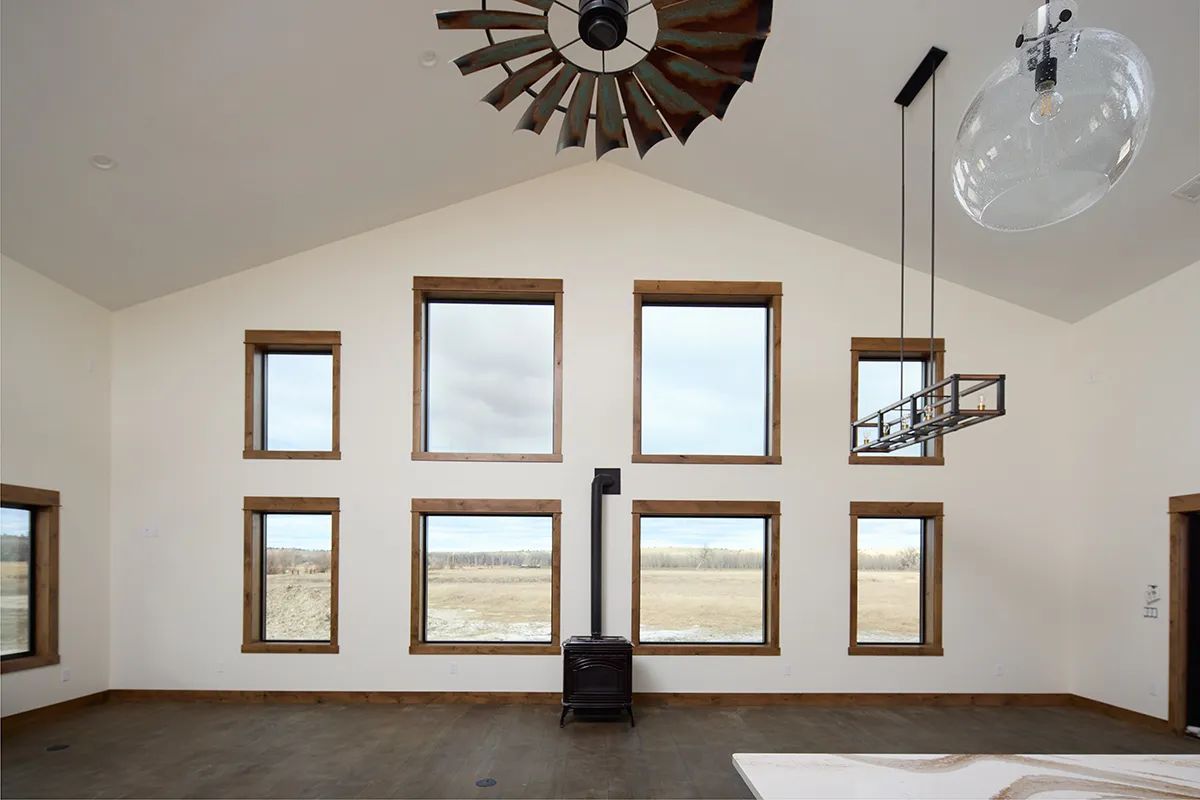
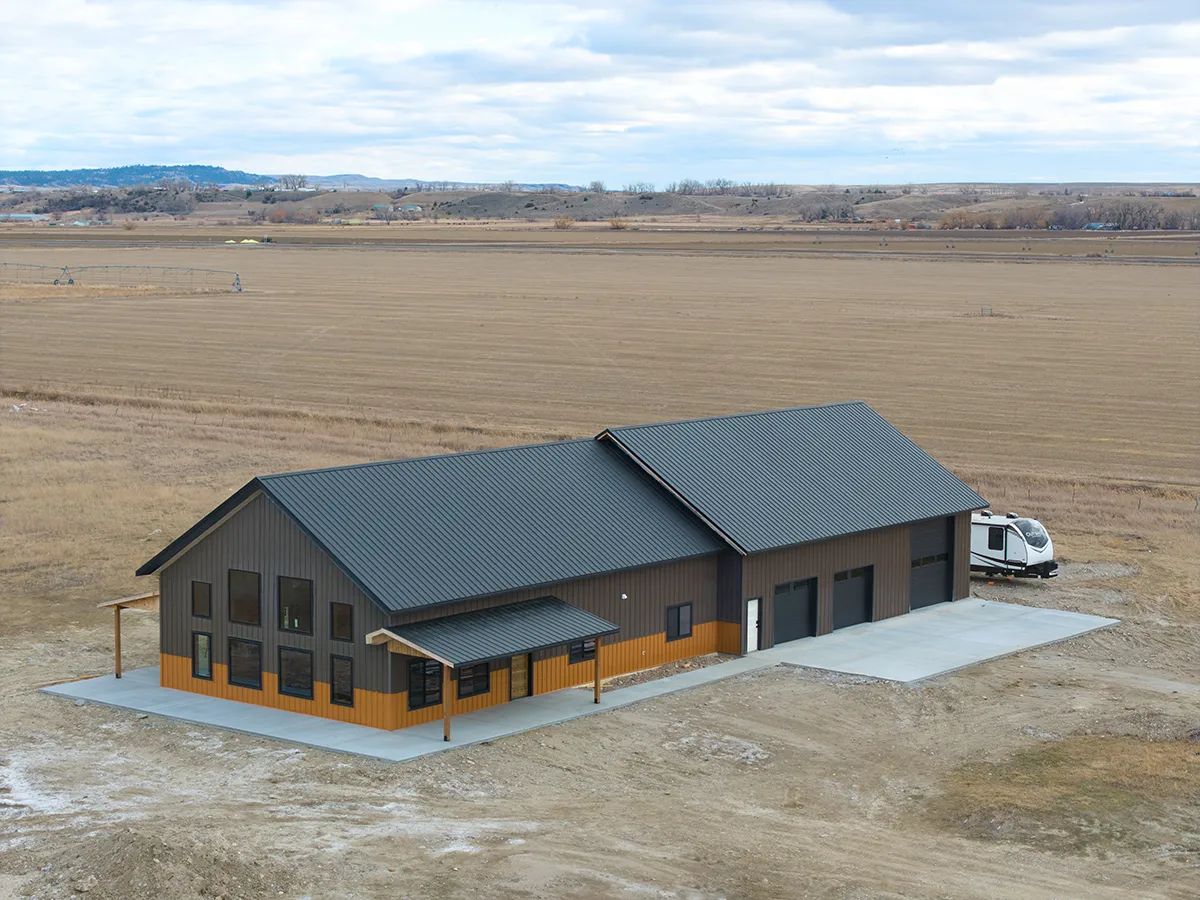
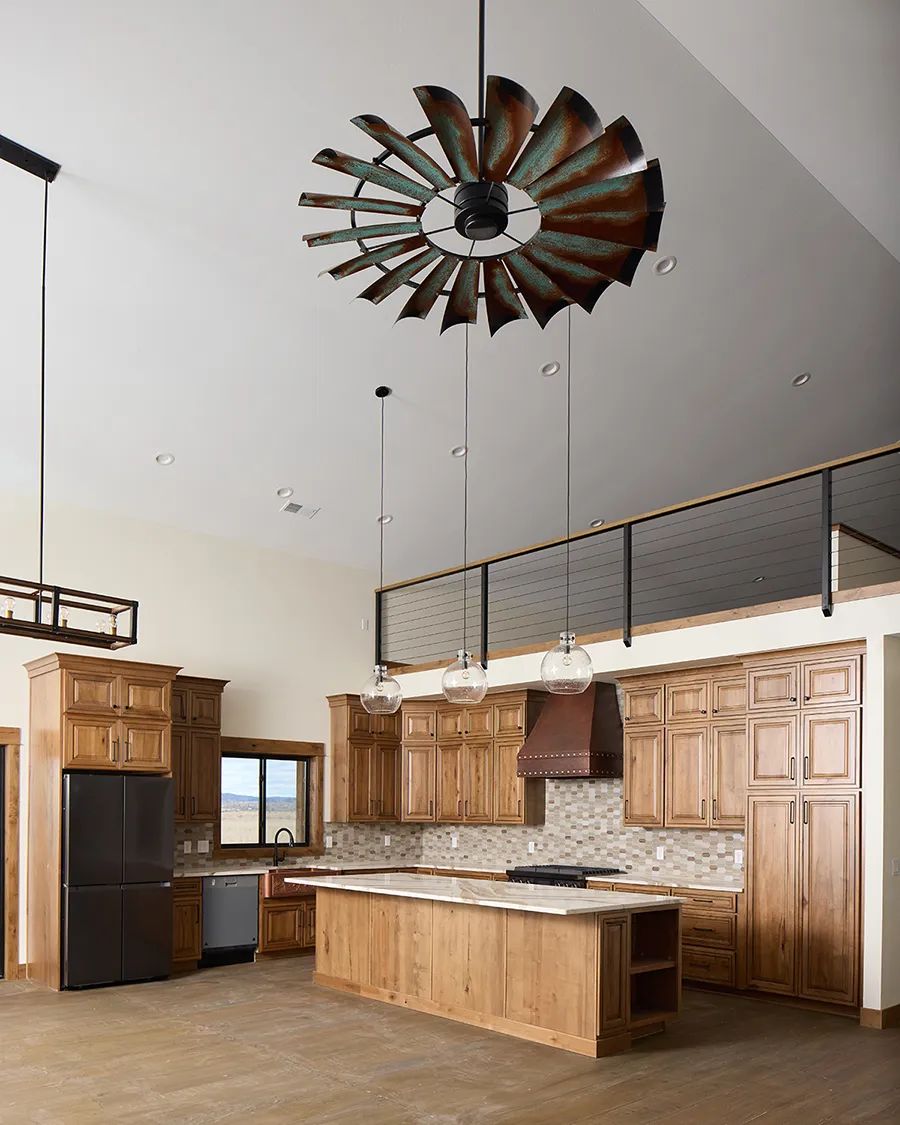
The barndominium featured in this story is just one example of how Scot’s custom approach plays out in real space. On paper, the word “barn” carries a particular image. Scot takes that expectation and stretches it. Structurally, the building reads as a classic barndominium: a large shell, soaring volume, a single continuous roofline, and living space combined with generous storage for RVs, boats, and gear. It sits outside the city limits, where covenants permit metal, and the open land matches the structure's scale. Inside, the house feels less like a barn and more like a warm, modern home dropped into the Montana countryside.
ENGINEERING THAT COMES FIRST
Scot pays attention to every detail from start to finish. He is blunt about the soil's complexities for this home. Soil can be tricky, and he refuses to ignore that. On this project, that meant soil testing, engineering support, and a monolithic concrete slab with radiant heat divided into zones. The entire floor will be warm, from the shop to the lofted living spaces. There is a separate HVAC system for backup and temperature control. Structural engineers sized the framing to carry the open spans and tall walls without sagging. “Five years from now, you don’t want a two-inch drop on one side of the house,” he says. For larger or more complex projects, he considers that kind of engineering non-negotiable.
MATERIALS THAT TELL A STORY
The concrete floor is finished to resemble reclaimed barnwood, with plank lines and tonal variations that echo old timber without pretending to be something it isn’t. Instead of painted MDF trim, they selected a custom-stained wood package that runs through the house, adding warmth tothe concrete and metal. The stain is mixed and applied specifically for this home. It is then sanded and finished the same way on every piece, so it reads as one continuous element.
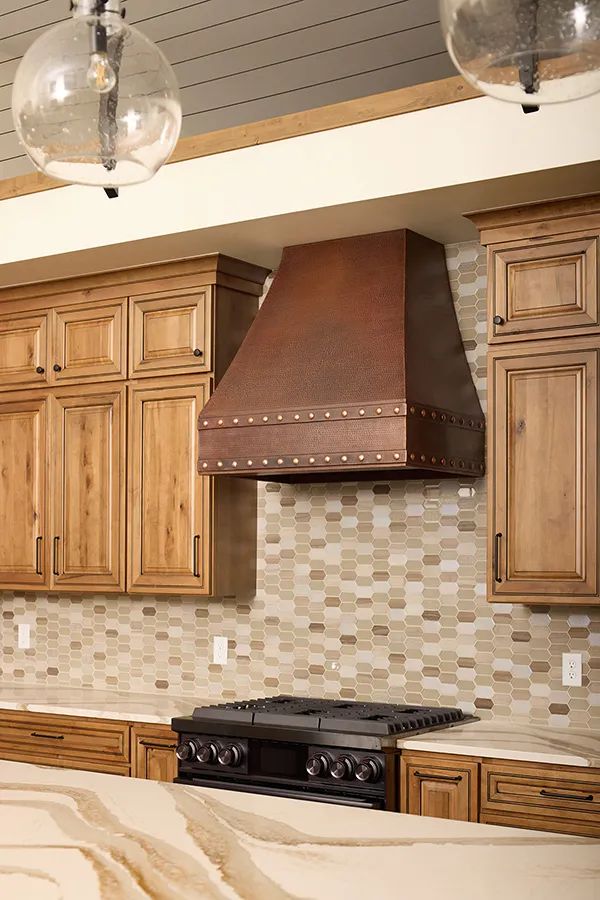
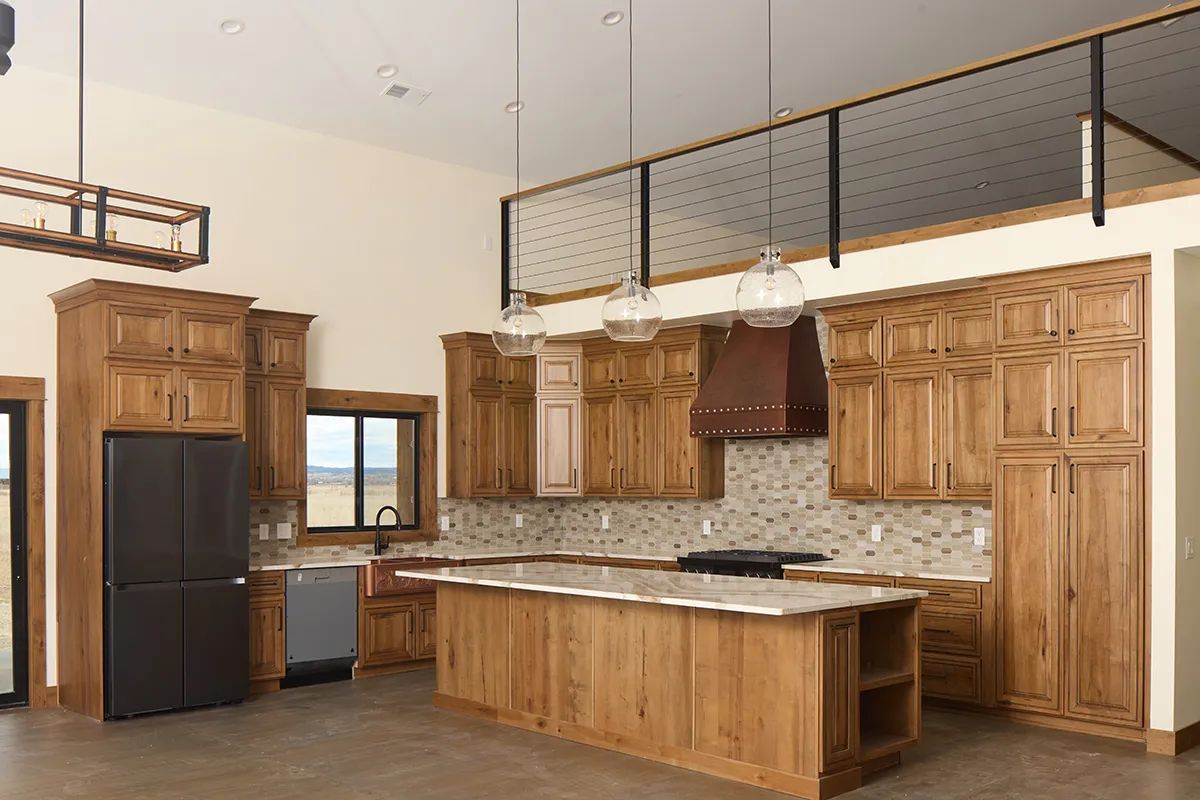
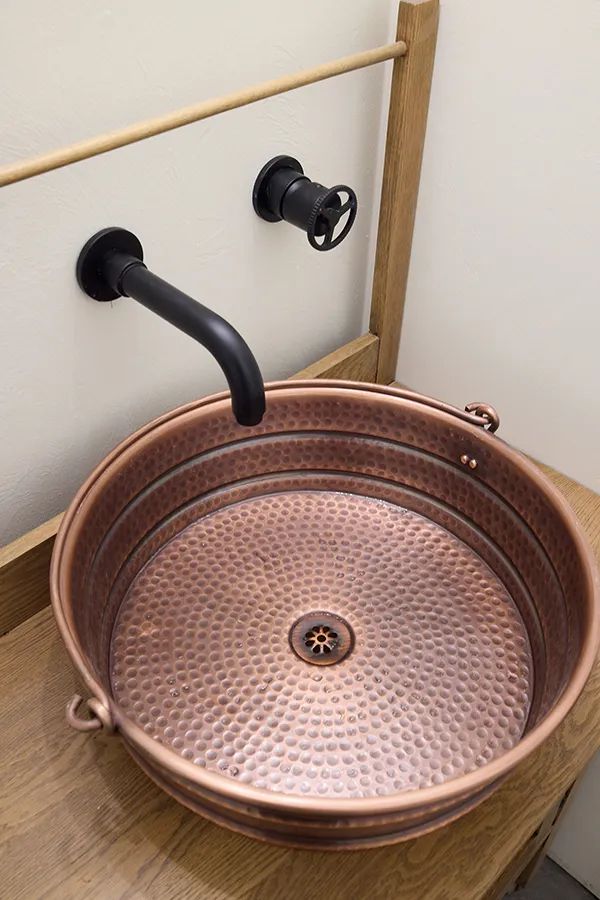
Copper appears in unique ways throughout the home. The homeowners love it, so Christy helped them choose a copper range hood and vessel sink for the powder room. The vanity underneath is a repurposed antique they found in Wisconsin and shipped to Montana, a nod to their story and their style. In the kitchen, the island holds more than a standard run of drawers. Shelves for cookbooks tuck into one side. Spice racks anchor the ends because the couple likes to cook together and needs a layout that supports that.
DESIGN THAT REFLECTS REAL LIFE
Every detail in the home circles back to the life that will be lived inside it. These clients are empty nesters. They do not want a television dominating the main room. They own a wagon-wheel coffee table, so ultra-sleek, ultra-modern finishes would clash with everything they plan to move in. Christy pays close attention to that. “If you have a wagon wheel coffee table, we can’t go full modern,” she states. Design, in their view, has to honor what is already part of a family’s life.
Both of them think hard about resale, even when a client insists this is the “forever home.” Scot spends time explaining where it makes sense to splurge and where it does not. High-quality windows, thoughtful mechanical systems, and solid structure are worth the money, he says. Hyper-specific layouts and odd bathroom arrangements usually are not. Scot’s honesty with clients continuously sets him apart. Christy has had to talk clients out of concepts as well, not because she lacks imagination, but because she knows how hard it would be to sell later. They want their work to stand the test of time in multiple ways.
They are also willing to say when a project is not the right fit. If someone insists on low-end products that will fail quickly, Scot knows he will get the call when the wind whistles through the windows. He would rather walk away than build something that will not hold up. Christy shares the same view on style. She describes her own aesthetic as warm and timeless, not starkly minimal but not maximalist either.
FROM STRUCTURE TO SANCTUARY
Ultimately, the barndominium becomes a clear expression of how Scot and Christy work together. A structure this large could easily feel cold or unfinished, but their collaboration pulls it firmly into the realm of home. He builds the bones that will stand for generations, and she shapes the choices that make those bones feel lived in and personal. Together, they turn an unconventional concept into something inviting and deeply functional. And maybe that’s the real signature of their partnership. It’s not just about building a barndominium or any custom home. It’s about creating a place where someone walks in, looks around, and says this is mine, and I love it.